What is the connection between psychological safety and conflict?

Psychological safety is a term that’s been gaining popularity over the last few years, especially as businesses grapple with establishing a new normal since the onset of the pandemic. Originally coined by Amy Edmonson in the book The Fearless Organization, “team organizational safety” is a more nuanced way of describing how to build an environment of trust in the workplace. Trust that individual employees can speak with candor about challenges, mistakes, observations, and concerns without fear of retaliation.

To me this sounds like a work environment with healthy a conflict management culture.

In workplaces where employees are afraid of potential conflict, they may expend a lot of energy parsing their words or maneuvering around the elephant in the room. The result is often that unhealthy and inefficient patterns become endemic, sometimes leading to burnout, high turnover, or even legal issues if conflict erupts.

When organizations invest in building conflict management capacity it doesn’t mean that conflict never happens. That’s impossible! Where there are people, there will be conflict. However, with effective conflict management tools and and investment in building open communication, conflict can become a positive force for growth. Relationships are strengthened when conflict is handled effectively. Resources are used more efficiently if time isn’t wasted on avoidance tactics and subterfuge. And the overall organizational impact is greater.

The impact of effective conflict management is just as relevant in for profit businesses, non profit organizations, volunteer and social justice activism groups… Again, anywhere there are people trying to work together, there will be conflict.

One effective way to bring more effective conflict management into an organization is to learn the tools of mediation. Mediation is a conflict resolution process that utilizes a trained third party, trusted by all sides, to intervene and support the communication and collaborative problem solving of individuals experiencing conflict. But the tools of the mediator have much broader application than just the mediation process itself.

Learning to become a mediator is a great way to build more effective conflict management skills overall. That’s one reason why I strongly believe that #MediationIsForEveryone.

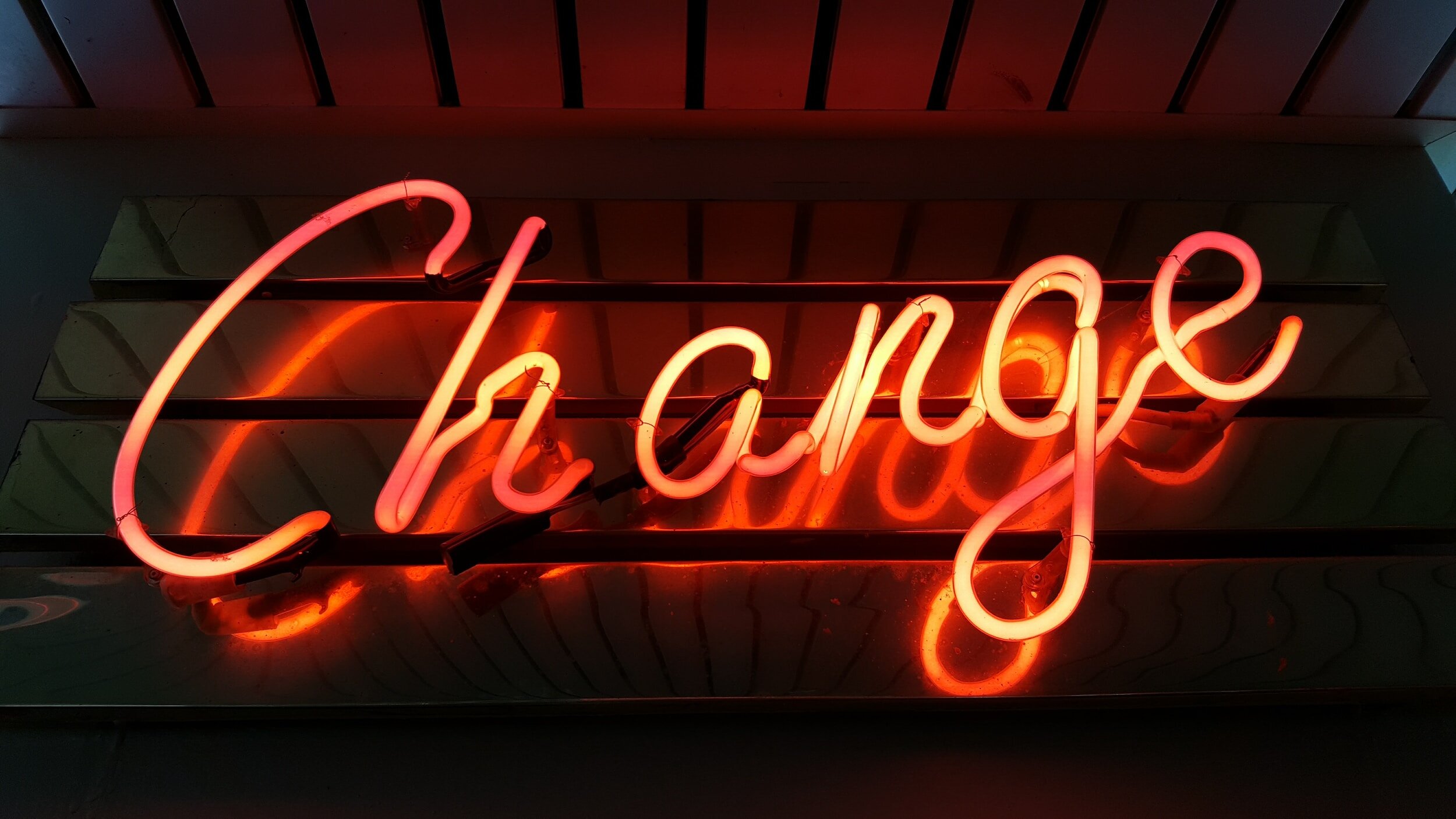
The only constant in life is change

Or so says Heraclitus. (I had to look up that reference in order to give credit, but I’ve known the saying for years.)

On my better days I can embrace the spirit of this truism, feeling in flow with the constant evolution of life. And in my more rigid moments I resist the reality of continual change, grasping for a structure or a system that will deliver me to a mythical final destination. That mythical destination where my house is always clean (ha!), there’s always food in the fridge, the meals are always planned, my kids are always satisfied, and the money is always flowing in and out in balance.

Of course I know it’s ridiculous to imagine I could arrive to this fantastical alternate reality. And the truth is, I wouldn’t really want to. So much of the beauty and joy of life comes from the change and the evolution. Being in relationship with my kids as they grow and change. Sharing greater intimacy with friends as we witness each other’s trials and tribulations, commiserating and celebrating along the way. Experiencing deeper knowledge and understanding in my work as I make mistakes and dive into new challenges.

Have any of you read The Parables (Parable of the Sower and Parable of the Talents) by Octavia Butler? (If you haven’t yet, I seriously recommend you get on that. Your library probably has them, or you can buy them HERE.) The sacred text from that story called The Book of the Living, includes this foundational verse, ‘God Is Change’.

“All that you touch, you change. All that you change, changes you. The only lasting truth is change. God is change.”

I’m not a religious person, but I’m also not atheist or agnostic. So I enjoy exploring non-dogmatic philosophies about God, like this one. And I also enjoy using this verse by Butler to bring me back into flow. To not just tolerate the constancy of change, but to lean in and embrace it. To seek change, to be in dialogue with change, to shape change.

Much of the change that we experience is outside of our control - a loved one’s sudden illness, the loss of a job, natural disasters. But finding a sense of agency within the change is where I like to be. And of course the locus of my agency is always around myself - my own thoughts, feelings, and behaviors. I cannot control others, I can only choose for myself.

I can choose my priorities, my perception, and my response. I can choose who to be in relationship with and how, where to expend my energy, and how to express myself.

This summer I’ve taken some time to rest and refocus. I’ve paused in my work to think and tinker and consider how I wish to move forward. I can’t say I have a solid, fully formed plan. (And even if I did, it would probably change!) But I’m embracing intentional change and diving into a season of experimentation, which is sure to bring even more change. And so it goes…

What is your relationship like with change? I’d love to read your thoughts.

Mediation Is for...

So I’ve been practicing mediation for a long time. Like a really long time. And my practice started at such a young age that the principles, communication skills, and premise of mediation have informed pretty much all of my adult relationships. Sometimes being so immersed in a particular way of seeing the world can make it challenging to understand that not everyone sees things the same way.

Research confirms that most members of the general public here in the U.S. don’t really know what mediation is. Even if they’ve heard the term, they don’t understand how to differentiate mediation from other problem solving or dispute resolution frameworks. And many folks don’t really know how mediation is different from litigation.

If we scan the popular media for representations of mediation, what is out there might be good for entertainment value but not necessarily accuracy. Anybody seen the short lived tv drama Fairly Legal? Or Ice-T as The Mediator? Both of these attempts to popularize mediation seem to reinforce some of the inaccurate assumptions that a mediator is someone who will come in and tell you what to do because they somehow have better reasoning skills or more life experience.

You don’t have to have a law degree, or really any formal educational qualifications, to be an excellent mediator. The best mediators see their clients as the experts. The best mediators are the best listeners, able to understand and empathize. The best mediators are open minded and support creative problem solving, never pigeon holing people into narrow options.

And there are so many more applications for mediation skills and practice than most people realize. This is what I’m feeling most excited about these days as I lean into my belief that #MediationIsForEveryone. The challenge of increasing awareness and democratizing the tools of mediation is equal parts confounding and invigorating.

I’m setting a challenge for myself to begin to articulate the myriad ways that mediation skills have been applicable in my life, as well as other opportunities I see for applying these tools. My hope is that one day everyone will be equipped to handle communication and conflict effectively in their own lives and relationships, and that the role of mediator will be central to all of our social institutions.